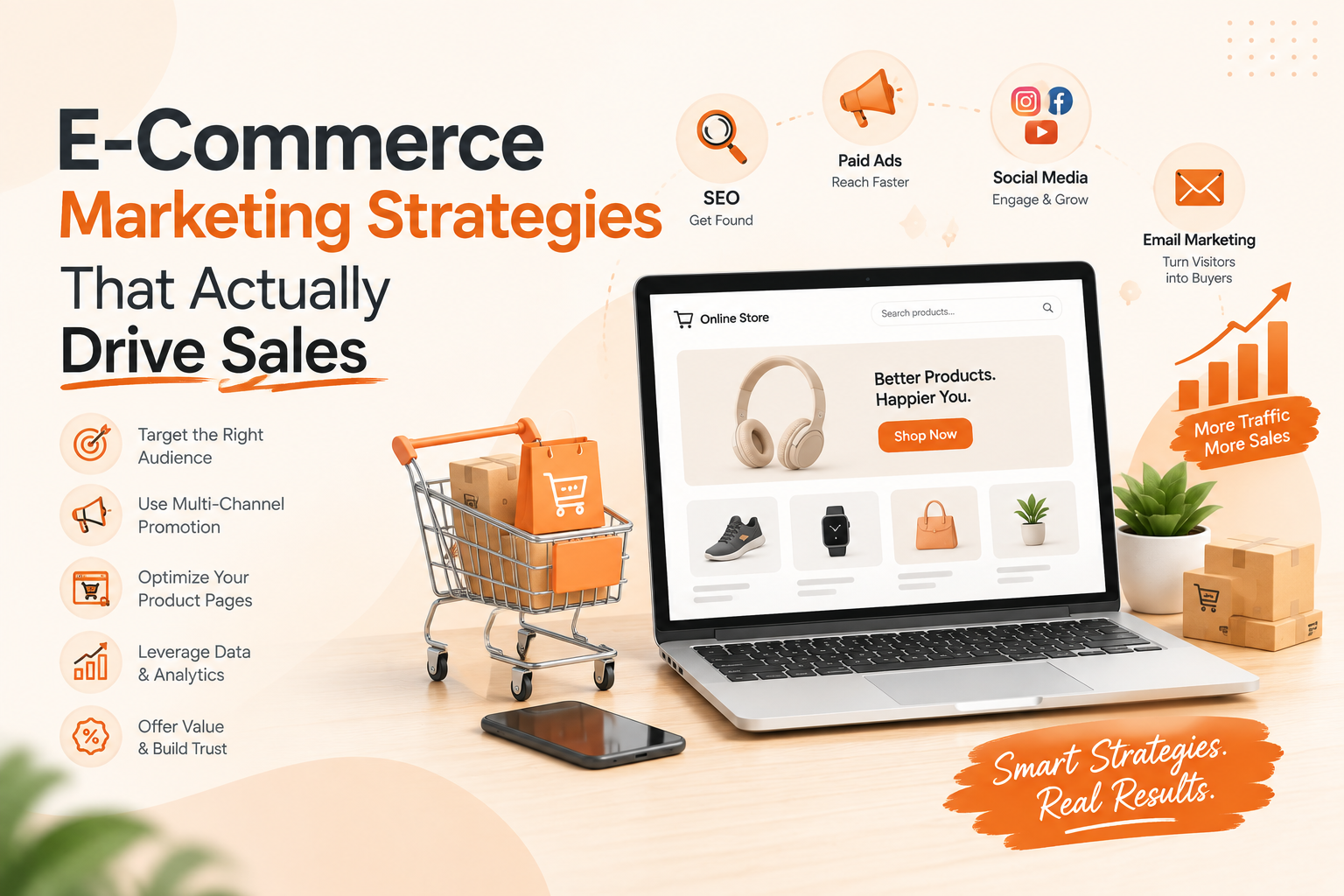
Every e-commerce brand runs marketing campaigns. Far fewer see those campaigns actually move revenue. If you've tried email blasts, social ads, and blog posts without a real bump in sales, the problem usually isn't effort — it's strategy.
In this guide, we break down e-commerce marketing strategies that are proven to convert browsers into buyers, backed by real tactics you can start using this week. No fluff, no recycled advice — just what works in 2026's competitive online retail landscape.
Why Most E-Commerce Marketing Tips Fail
Before diving into what works, it's worth understanding why so many e-commerce marketing tips fall flat. Three mistakes show up again and again:
• No clear funnel — brands run ads without a plan for what happens after the click.
• Chasing vanity metrics — likes and impressions don't pay the bills; conversions do.
• Generic tactics — copying what worked for a different brand, in a different niche, with a different audience.
The strategies below are built to avoid these traps by tying every tactic to a measurable outcome: more sales.
Proven E-Commerce Marketing Strategies
These are the core, high-impact tactics driving results for online stores right now.
1. Email Marketing & Abandoned Cart Flows
Email remains one of the highest-ROI channels in e-commerce. A well-built abandoned cart sequence alone can recover 10-15% of lost sales. Focus on:
• A 3-email cart recovery sequence (reminder, urgency, discount)
• Post-purchase flows that upsell and request reviews
• Segmented campaigns based on purchase history and browsing behavior
2. Retargeting & Paid Social Ads
Most visitors don't buy on their first visit. Retargeting ads on Meta, Instagram, and Google keep your brand in front of warm leads. Combine dynamic product ads (showing the exact item they viewed) with a modest discount to close the sale.
3. SEO & Content Marketing for Product Pages
Optimizing product and category pages for search intent — not just keywords — drives free, compounding traffic. Write unique product descriptions, add FAQs that match real search queries, and build supporting blog content (like this one) that links back to relevant product pages.
4. Influencer & UGC Partnerships
User-generated content and micro-influencer partnerships build trust faster than branded ads. Feature real customer photos and reviews on product pages, and partner with niche creators whose audience matches your ideal customer.
5. Loyalty & Referral Programs
Retaining an existing customer costs far less than acquiring a new one. A simple points-based loyalty program or a "give $10, get $10" referral offer turns happy customers into a repeatable sales channel.
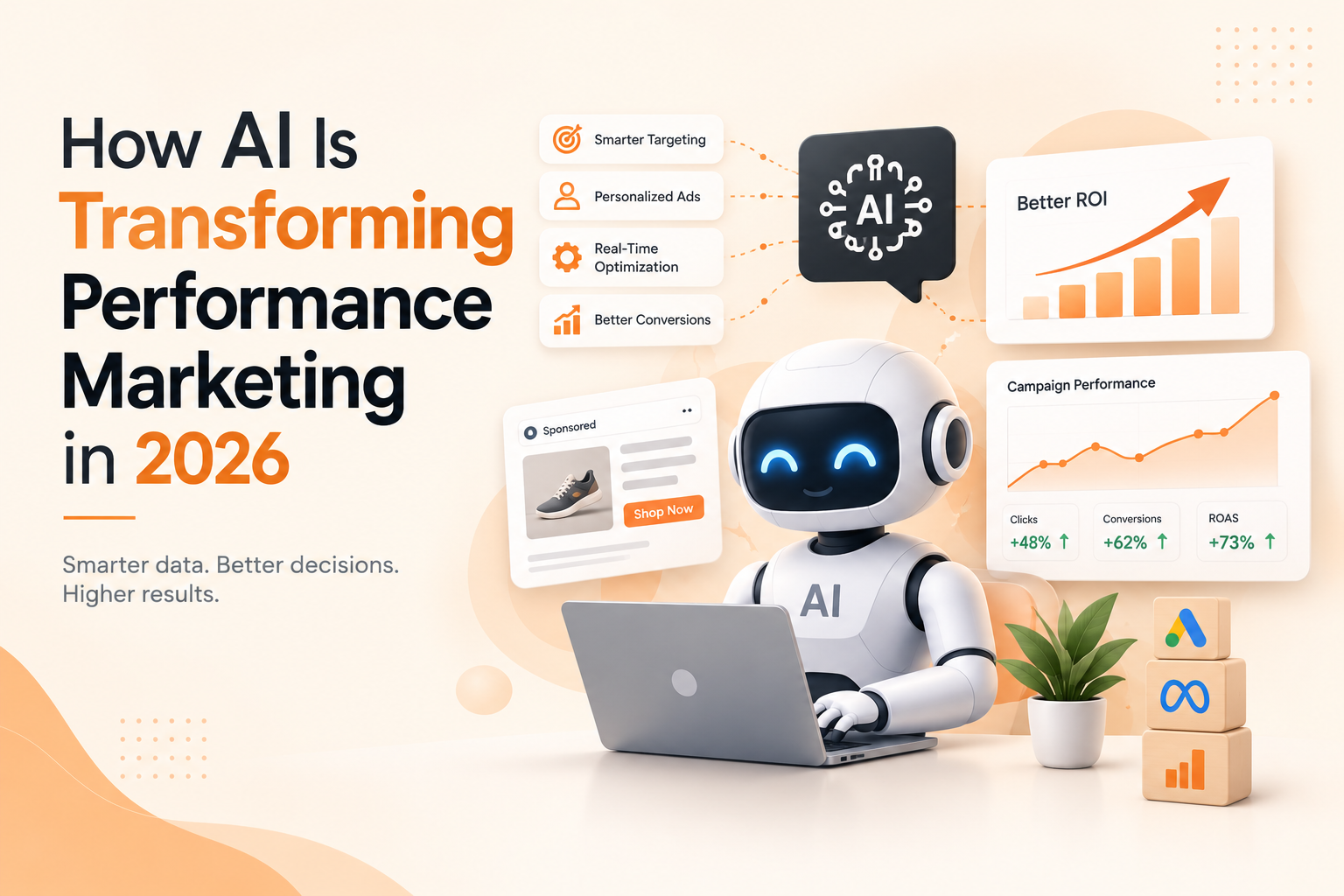
6. Personalization & AI-Driven Recommendations
"Customers who bought this also bought..." isn't just an Amazon trick — it works everywhere. Use on-site recommendation widgets and personalized email content based on browsing and purchase behavior to increase average order value.
How to Increase Online Sales With Data
Strategy without measurement is guesswork. To consistently increase online sales, build a habit of reviewing:
• Funnel analytics — where are visitors dropping off before checkout?
• A/B tests — on headlines, checkout flow, and product page layout
• Customer lifetime value (CLV) — to know which channels bring the most valuable customers, not just the most traffic
Small, data-backed tweaks — like simplifying checkout from 5 steps to 2 — routinely outperform launching an entirely new campaign.
Digital Marketing for E-Commerce: Building a Full-Funnel Approach
The strongest digital marketing for e-commerce brands connects every stage of the customer journey instead of treating channels in isolation:
• Top of funnel (awareness): SEO content, social media, influencer partnerships
• Middle of funnel (consideration): retargeting ads, email nurture sequences, reviews
• Bottom of funnel (conversion): cart recovery emails, limited-time offers, simplified checkout
When these stages work together, a visitor who finds you through a blog post today might convert three weeks later through a retargeting ad — and that's a win, even if it doesn't look like one in a single-channel report.
Best Marketing Strategies for Online Stores by Business Size
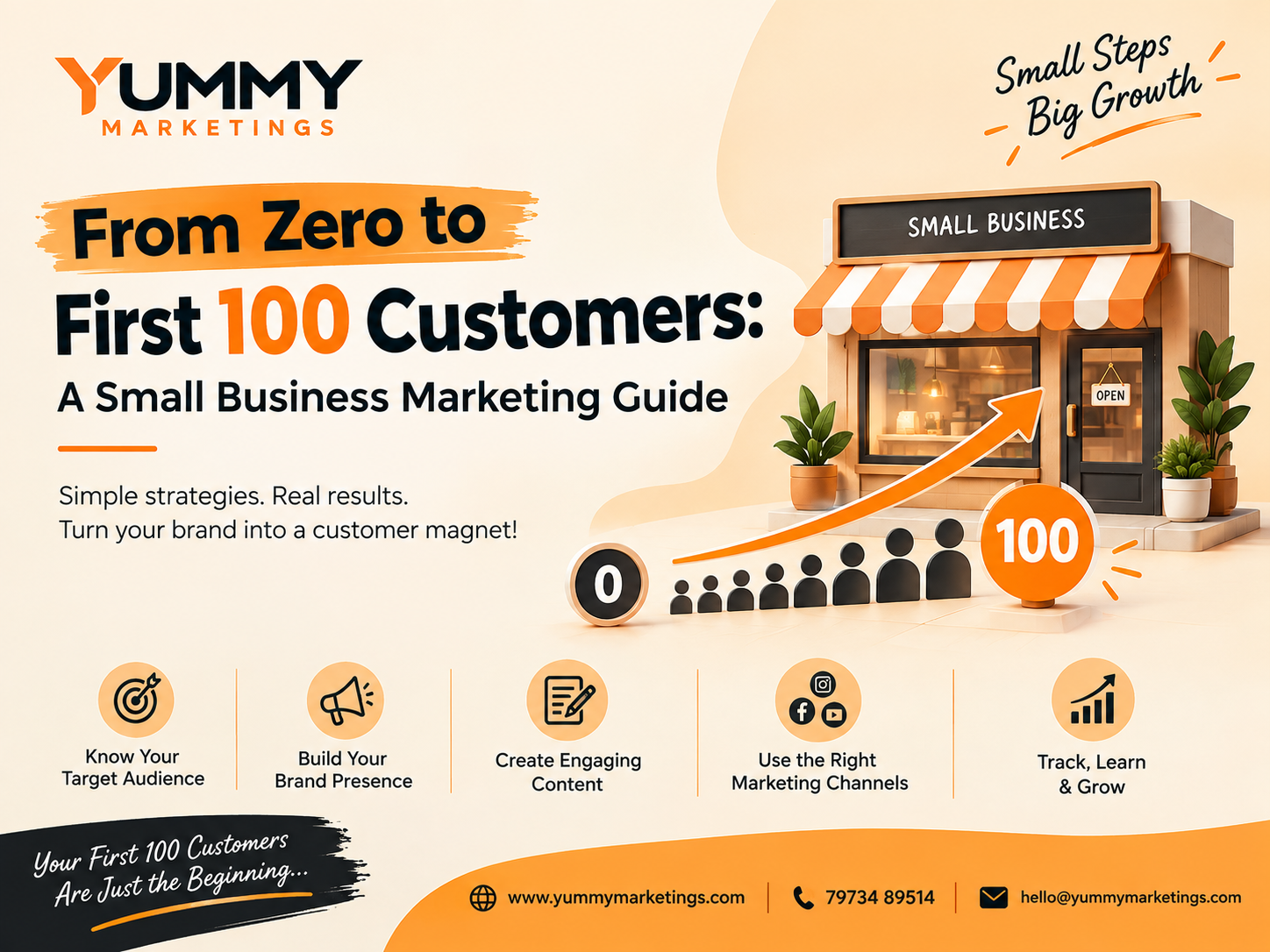
Small & New Stores
• Focus on organic social and SEO content — low cost, long-term payoff
• Start email list-building from day one
• Prioritize a handful of channels done well over many done poorly
Growing & Established Stores
• Invest in paid retargeting and lookalike audiences
• Build out loyalty and referral programs
• Layer in personalization and marketing automation
Real Example: What This Looks Like in Practice
Consider a mid-sized online apparel store that was relying almost entirely on paid social ads. After introducing an abandoned cart email flow, optimizing product page SEO, and launching a simple referral program, the brand saw cart recovery rates improve significantly and organic traffic begin contributing a meaningful share of monthly revenue within a few months — without increasing ad spend. The lesson: diversifying across a few well-executed strategies consistently outperforms doubling down on one channel.
Conclusion: Turn Strategy Into Sales
The e-commerce marketing strategies covered here — email flows, retargeting, SEO content, influencer partnerships, loyalty programs, and personalization — work best when combined into a full-funnel approach and backed by real data, not guesswork.
You don't need to implement everything at once. Start with one or two strategies that fit your current stage of growth, measure the results, and build from there.
Need help implementing these strategies? Talk to Yummy Marketing's team and let's build an e-commerce marketing plan that actually drives sales.
Comments