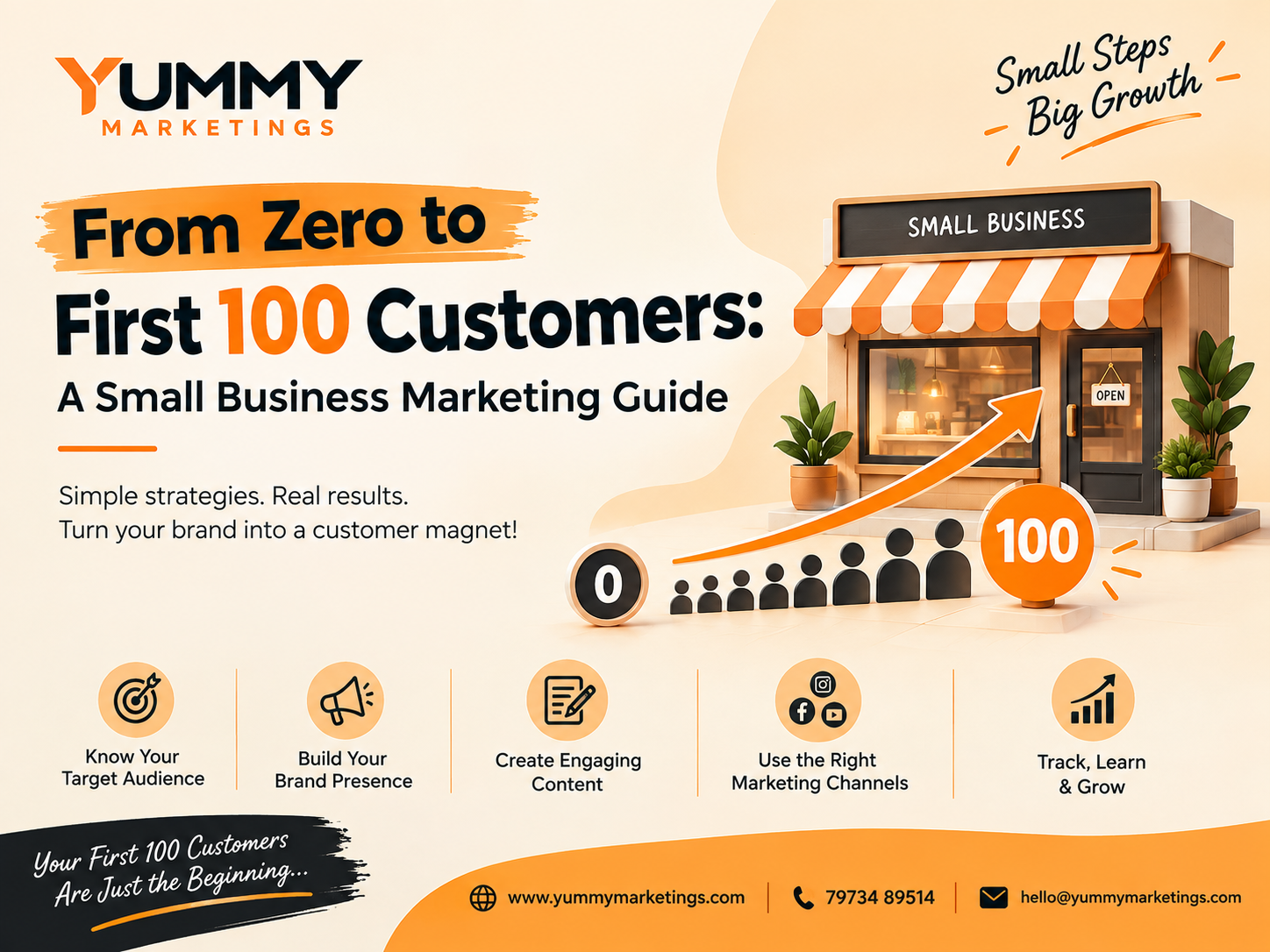
Introduction: Why Your First 100 Customers Matter Most
Every small business faces the same terrifying blank page: zero customers, zero reviews, zero proof that anyone wants what you're selling. This is the "cold start" problem, and how you handle it determines whether your business gains momentum or stalls out in month two.
Getting to your first 100 customers isn't just a vanity milestone. It's proof of concept. It's early cash flow. And it's the foundation for the referrals and reviews that will bring you customer 101 through 1,000 with far less effort than the first hundred took.
This guide walks you through a practical, low-budget roadmap — from knowing exactly who you're selling to, all the way through turning first-time buyers into repeat customers and referral sources.
Step 1: Know Exactly Who You're Selling To
Define Your Ideal Customer Profile
Before you spend a single dollar on marketing, get specific about who you're trying to reach. "Small business owners" is not a target customer — "solo bookkeepers running their own practice who are overwhelmed by client onboarding" is. The more specific your profile, the easier every other marketing decision becomes.
Write down three things for your ideal customer: their biggest frustration, where they currently go for a solution (even an imperfect one), and what would make them trust a new, unproven business.
Where Your First Customers Are Already Hanging Out
Your early customers are already somewhere — a Facebook group, a subreddit, a local Chamber of Commerce event, a specific hashtag on Instagram. Your job isn't to build an audience from scratch; it's to find the audience that already exists and show up there consistently and helpfully.
• List 3–5 online communities or local groups your ideal customer is already part of
• Note what questions they ask most often — these become your content topics
• Identify 2–3 other small businesses or creators who already have their trust
Step 2: Build a Simple, Trustworthy Online Presence
Website & Google Business Profile Basics
You don't need a fancy website to get your first customers — you need a credible one. A clear headline explaining what you do, who it's for, and how to contact or buy is enough to start. If you serve a local area, claim and fully complete your Google Business Profile; it's free and it's often the first thing a prospective customer checks.
Social Proof: Reviews, Testimonials, and Case Studies
Before you have paying customers, borrow credibility: get quotes from beta users, colleagues who've seen your work, or people you helped for free early on. Once real customers come in, ask for a review or short testimonial immediately after a good experience — don't wait weeks, when the moment (and their enthusiasm) has passed.
Step 3: Low-Cost Customer Acquisition Strategies
Organic Social Media Growth
Pick one platform where your ideal customer already spends time, and post consistently rather than spreading yourself thin across five. Share process, results, and lessons learned — not just promotions. Early-stage audiences respond far better to authenticity than polish.
Local SEO & "Near Me" Searches
If you serve a specific geographic area, local SEO is one of the highest-ROI channels available to a new business. Optimize your Google Business Profile, get listed in local directories, and use location-specific keywords on your website (e.g., "marketing agency in [city]") to capture "near me" search intent.
Referral & Word-of-Mouth Programs
Ask every satisfied customer — even your very first one — for an introduction to someone else who might need what you offer. A simple referral incentive (a discount, a free add-on, or even just a handwritten thank-you) can turn one happy customer into three.
Email Marketing for Early-Stage Businesses
Start collecting emails from day one, even before you have a product ready. A simple newsletter sharing your progress, tips, or early offers keeps your first fans engaged and ready to buy the moment you launch.
Step 4: How to Get Your First 100 Customers (Step-by-Step)
Start with Your Warm Network
Your first 10–20 customers often come from people who already know and trust you: friends, former colleagues, past clients from a previous role. Reach out personally rather than posting a generic announcement — a direct message converts far better than a broadcast.
Offer an Irresistible Launch Deal
A time-limited founding-customer offer (discounted pricing, bonus service, or extended support) gives hesitant prospects a reason to say yes now instead of "maybe later." Just make sure the offer is sustainable — you're not trying to lose money, just lower the first-purchase barrier.
Partner with Complementary Businesses
Find businesses that serve the same customer but aren't direct competitors, and propose a simple cross-promotion: a shoutout, a bundled offer, or a shared event. Their existing trust with an audience transfers to you faster than any ad campaign.
Leverage Content Marketing to Build Trust Early
Publishing genuinely useful content — like this guide — does double duty: it builds search visibility over time and demonstrates expertise to anyone evaluating whether to trust you with their money.
Step 5: Finding Customers Beyond Your Local Market
Online Communities & Niche Forums
Beyond social media, niche forums, subreddits, and Slack or Discord communities are often full of people actively asking for recommendations in your category. Participate genuinely for a while before ever mentioning your business — communities can tell the difference between a contributor and a drive-by promoter.
Freelance & Startup Marketplaces (If Applicable)
If your offer fits a marketplace model, platforms built for freelancers or startups can put you in front of buyers who are already looking to hire or buy — reducing the trust-building work you'd otherwise need to do from scratch.
Paid Ads on a Small Budget (Optional, Low-Spend Tactics)
Paid ads aren't required to hit 100 customers, but a small, tightly targeted test budget ($5–10/day) on one platform can accelerate things once you know your message and audience are converting organically. Don't scale ad spend before you've validated the offer for free.
Step 6: Turning First Customers into Repeat Buyers & Referrals
Onboarding & Customer Experience
The experience right after purchase matters as much as the sale itself. A clear welcome message, a fast response to questions, and delivering on your promise are what turn a one-time buyer into a repeat customer and vocal advocate.
Building a Simple Referral Loop
Make it easy and rewarding for customers to refer others: a shareable link, a small thank-you gift, or simply asking directly at the moment they express satisfaction. Referral loops compound — each new customer becomes a potential source of the next.
Common Mistakes to Avoid When Chasing Your First 100 Customers
• Overspending on paid ads before validating your message organically
• Ignoring your existing network in favor of chasing strangers online
• Trying to appeal to everyone instead of focusing on a specific niche
• Waiting for a "perfect" website or product before starting outreach
• Failing to ask happy customers for reviews or referrals
Conclusion: Your Roadmap from Zero to 100
Getting your first 100 customers comes down to a simple sequence: know exactly who you're targeting, show up where they already are, make it easy for them to say yes, and turn every happy customer into a source of the next one. None of it requires a big budget — it requires consistency and genuine focus on the people you're trying to help.
Ready to put this into action but don't have the time to do it all yourself? Yummy Marketings helps small businesses build the exact strategy outlined in this guide — from local SEO to referral systems. Get in touch to build your customer acquisition plan today.
FAQs
How long does it take to get 100 customers as a new small business?
It varies widely by industry and price point, but most small businesses following a consistent outreach and referral strategy see their first 100 customers within 3–6 months. Local, lower-priced offers tend to move faster than high-ticket or highly niche services.
What is the cheapest way to get your first customers?
Referrals, organic content, and direct outreach to your warm network are the lowest-cost paths. They require time and consistency rather than a marketing budget, making them ideal for pre-revenue or bootstrapped businesses.
Do I need paid ads to get my first 100 customers?
No. Most businesses can reach their first 100 customers through organic and relationship-based strategies alone. Paid ads become more useful once you've validated your offer and want to scale acquisition faster.
How do I find customers with a small marketing budget?
Focus on local SEO, niche online communities, and referral incentives — these channels rely more on effort and targeting than ad spend, making them accessible even with a budget close to zero.
What's the best marketing channel for small businesses just starting out?
It depends on your business type: local SEO works best for service businesses with a physical area, while niche communities and content marketing tend to work best for online or specialized offers. Test one channel deeply before spreading into others.
Comments